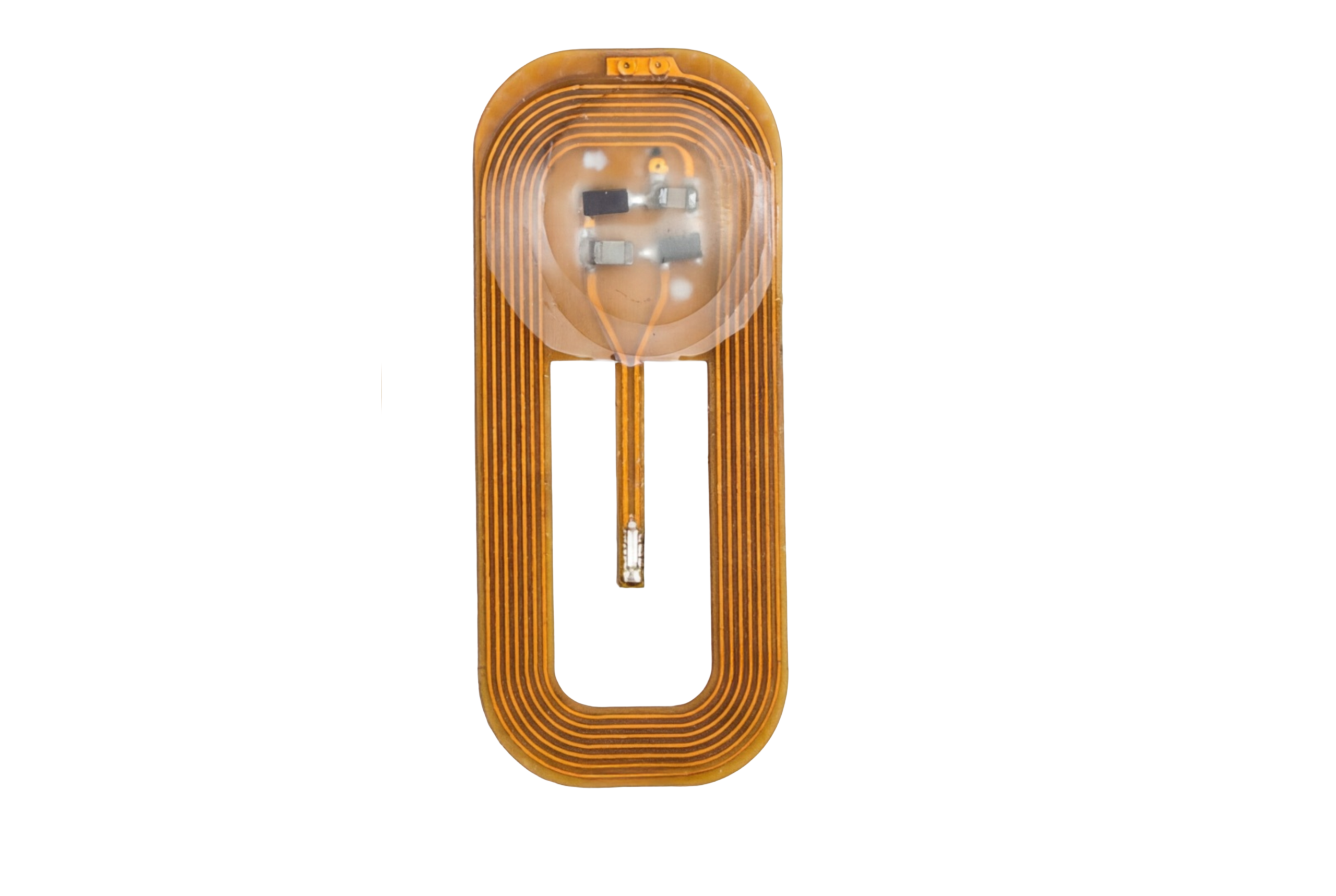
Wireless, fully implantable devices designed for chronic optogenetic stimulation in freely behaving animals.
Lorem ipsum dolor sit amet, consectetur adipiscing elit. Ut elit tellus, luctus nec ullamcorper mattis, pulvinar dapibus leo.
Wireless
Peripheral
Battery-Free
Precision
Spinal
Stimulation
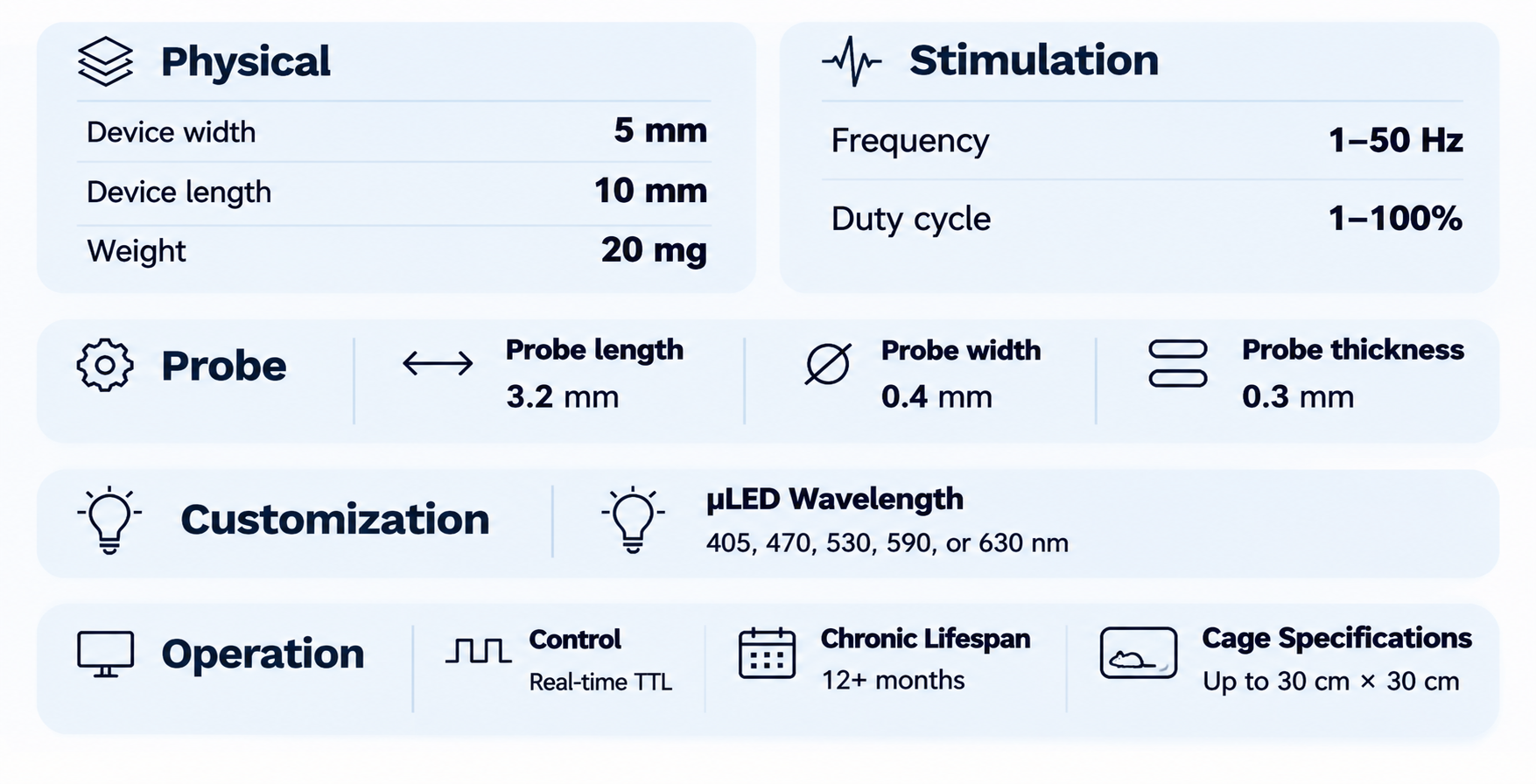
Size: 10 mm x 5 mm (L x W)
Weight: 20mg
NEUROLUX
Modern Applications
Pain Research
Investigate neural pathways underlying acute and chronic pain through targeted optogenetic modulation of spinal circuits.
Spinal Circuit Mapping
Interrogate specific spinal afferents and neuronal populations to study circuit function and sensory processing.
Sensory Processing
Explore spinal mechanisms involved in mechanical and thermal sensation, itch, nociception, and stimulus-evoked behavioral responses.
Analgesic &Therapeutics
Evaluate pain modulating interventions and investigate how targeted spinal circuit activation influences behavioral responses. The published protocol specifically discusses using the platform to evaluate analgesic efficacy.
Optos in Action
Lorem ipsum dolor sit amet, consectetur adipiscing elit. Ut elit tellus, luctus nec ullamcorper mattis, pulvinar dapibus leo.
Device Features
The NeuroLux Spinal device is a lightweight, fully implantable, battery-free optogenetic platform designed for targeted stimulation of spinal circuitry in freely moving animals. Featuring a flexible design and a single µLED probe positioned within the ventral epidural space, the device enables wireless, programmable light delivery for investigating spinal neural circuits and related behaviors. Its subdermal configuration eliminates exposed hardware and physical connections, supporting long-term experimental studies.
Lorem ipsum dolor sit amet, consectetur adipiscing elit. Ut elit tellus, luctus nec ullamcorper mattis, pulvinar dapibus leo.